


Comparing Vacuum Compression vs. Mechanical Compression for Pillows
- hongdemat
- Mar 25
- 5 min read

The bedding industry has undergone a massive transformation in the last decade, primarily driven by the rise of e-commerce and the need for global shipping efficiency. For manufacturers of pillows, cushions, and mattresses, the primary challenge is not weight but volume. Shipping "air" is expensive, which is why compression technology has become the backbone of modern logistics.
When deciding how to prepare products for the consumer, manufacturers generally choose between two primary methods: vacuum compression and mechanical compression. While both aim to reduce the footprint of the product, they function through different physics and have distinct impacts on the longevity of the pillow fibers. Understanding these differences is critical for any pillow compressing machine manufacturer looking to provide the best solutions for their clients.
Understanding Vacuum Compression
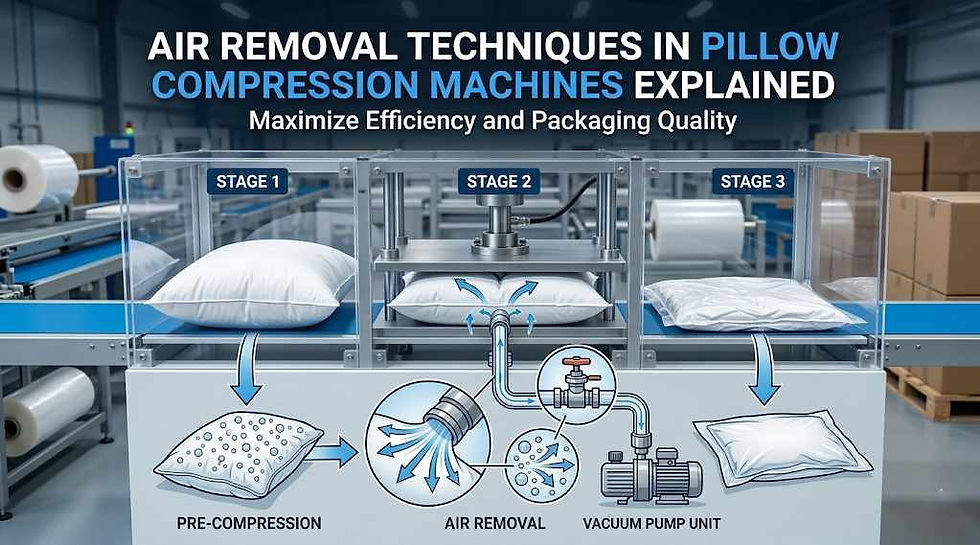
Vacuum compression is perhaps the most recognized method in the consumer space, often associated with "bed in a box" products. This process involves placing the pillow into a high-strength plastic bag and using a vacuum pump to remove the air from inside the bag. As the internal air pressure drops, the atmospheric pressure outside the bag pushes down on the product, flattening it to a fraction of its original size.
The Benefits of Vacuum Sealing
One of the primary advantages of vacuum compression is the airtight environment it creates. Because the bag is hermetically sealed after the air is removed, the pillow is protected from external contaminants during transit. This means moisture, dust, and odors cannot penetrate the packaging. For high-end down or feather pillows, keeping moisture out is essential to prevent the growth of mold or mildew during long sea voyages in shipping containers.
Furthermore, vacuum compression allows for a very high reduction ratio. Depending on the fill material, a pillow can be reduced to twenty percent of its original volume. This level of density is ideal for courier services where dimensional weight determines the shipping cost.
Potential Drawbacks of the Vacuum Method
The intensity of a vacuum can sometimes be its downfall. When air is forcefully sucked out, the fibers or foam cells inside the pillow are subjected to extreme pressure. If a pillow remains in a vacuum-sealed state for too long, a phenomenon known as "compression set" occurs. This is where the material loses its "memory" and fails to return to its original loft once the bag is opened. Synthetic microfibers and certain low-density memory foams are particularly susceptible to this type of structural fatigue.
Understanding Mechanical Compression
Mechanical compression, often referred to as hydraulic or pneumatic pressing, takes a different approach. Instead of using air pressure differentials, it uses physical force applied by a heavy plate or rollers to flatten the pillow. Once the pillow is flattened to the desired height, it is typically rolled or slid into a tight sleeve or bag, which then holds the tension.
Why Mechanical Force Wins on Speed
In a high-output factory setting, speed is the most important metric. Mechanical compression systems are generally much faster than vacuum systems. A vacuum pump takes time to evacuate the air, and the sealing process must be perfect to prevent "re-inflation." In contrast, a mechanical press can flatten a pillow in seconds. This efficiency makes mechanical systems the preferred choice for high-volume pillow compressing machine manufacturer operations that need to process thousands of units per shift.
Preservation of Material Integrity
Mechanical compression is often considered "kinder" to the internal structures of a pillow. Because the process is focused on physical displacement rather than the total removal of air from within the fiber pockets, the risk of permanent fiber collapse is slightly lower. When the mechanical restraint is removed, the pillow often recovers its shape faster than a vacuum-sealed counterpart. This is particularly noticeable in hybrid pillows that contain both foam clusters and fiberfill.
Direct Comparison: Space Efficiency
If the goal is absolute minimum volume, vacuum compression usually wins. The vacuum removes air from the very center of the pillow, creating a brick-like density that mechanical pressing struggles to match without using excessive force that might damage the fabric.
However, mechanical compression is better for "roll-packing." Many manufacturers use a mechanical press to flatten the pillow and then immediately roll it into a cylinder. This cylindrical shape is often more durable for retail display and easier for customers to carry home from a store. Vacuum-flattened pillows are often stiff and awkward to handle unless they are also rolled after the vacuum process.
Impact on Different Fill Materials
The choice between these two methods often depends entirely on what is inside the pillow. Not all fills react the same way to pressure.
Memory Foam and Polyurethane
Memory foam is highly resilient but has a "cell" structure. Vacuuming can sometimes cause these cells to stick together if the foam is not fully cured or if the environment is too warm. Mechanical compression, followed by a quick roll, tends to be safer for high-density foams as it avoids the "crushing" effect of a total vacuum.
Down and Feather
Natural fills like down are surprisingly hardy, but they need to breathe. While vacuuming is great for keeping them dry, long-term vacuum storage can snap the delicate quills of feathers. Mechanical compression is often used with a "breathable" wrap for shorter transit times to ensure the natural oils in the feathers aren't compromised by a lack of oxygen.
Polyester Fiberfill
This is the most common pillow fill and the most problematic for compression. Cheap fiberfill has a tendency to mat together when compressed. In this case, neither method is perfect, but mechanical compression allows for a more controlled "loft recovery" process.
The Role of Packaging Material
No matter which compression method is used, the packaging material is the silent hero. For vacuum compression, the film must have high oxygen barrier properties and be puncture-resistant. If a tiny hole appears, the pillow will "grow" in the box, potentially bursting the shipping carton.
For mechanical compression, the packaging needs high tensile strength. It is holding back the physical spring-force of the pillow. If the plastic is too thin, the constant outward pressure will cause it to stretch or tear. A reputable pillow compressing machine manufacturer will always recommend specific micron-levels for plastic films to match the force of their machines.
Logistics and the Bottom Line
From a business perspective, the decision usually comes down to the shipping destination. For local deliveries via company trucks, light mechanical compression is sufficient. It saves space without requiring expensive vacuum bags.
For international e-commerce, vacuum compression is the industry standard. The ability to fit five times as many pillows into a single 40-foot container can save a company hundreds of thousands of dollars in annual freight costs. Even if a small percentage of pillows require a "fluffing" period after arrival, the savings on shipping far outweigh the replacement costs.
Consumer Experience and Unboxing
The "wow" factor of unboxing is a significant part of modern branding. A vacuum-sealed pillow provides a dramatic transformation as it hisses and expands when the bag is cut. However, if the pillow remains flat for twenty minutes after opening, the customer becomes anxious.
Mechanical compression usually results in a faster "bounce back." Since the air wasn't completely evacuated, the fibers can re-oxygenate and expand almost instantly. For premium brands that prioritize the "first night" experience, mechanical or light-vacuum methods are often preferred to ensure the product looks and feels exactly as advertised within seconds of being opened.
Conclusion
Choosing between vacuum and mechanical compression is not about finding which is "better," but which is right for your specific product and supply chain. Vacuum compression offers unparalleled protection and volume reduction for long-haul shipping. Mechanical compression offers speed, cost-efficiency in packaging, and better preservation of delicate fiber structures.
For any pillow compressing machine manufacturer, the goal is to provide versatile equipment that can adapt to these needs. As the bedding market continues to move toward a digital-first model, the science of squeezing a pillow into the smallest possible box while maintaining its comfort will remain a top priority for engineers and manufacturers alike. By balancing the physics of air pressure with the mechanics of physical force, the industry can continue to deliver high-quality sleep products to doorsteps around the world.

Comments